
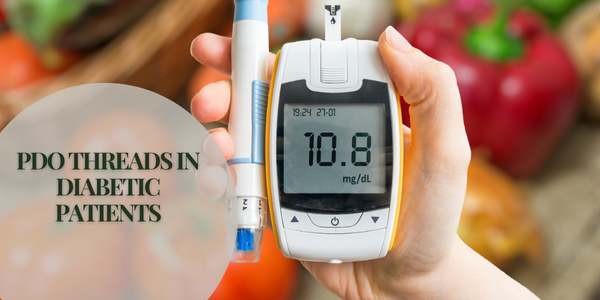
The cosmetic medicine industry is buzzing about PDO threads. The thin dissolvable sutures have entered the mix as not only a viable alternative to traditional surgical facelifts but as a leading minimally-invasive option.
People are realizing the immense benefits that PDO threads can provide. They can help produce great anti-aging results, addressing everything from drooping and sagging skin, to fine lines and wrinkles, and lack of definition.
The treatments are very quick, with most being completed within about an hour. There is little to no downtime and recovery time following the procedure, and the results last a long time.
While PDO threads can do all this and more, not everybody is recommended to get them. In this article, we’ll discuss two groups of people who should not get a PDO threads treatment — people who are diabetic or who have an autoimmune disease.
People with diabetes generally should not get a PDO thread treatment. Even though it is minimally-invasive and is much safer than other procedures, people with diabetes are still at much greater risk of getting an infection or having trouble healing.
 Medically reviewed by: Elizabeth Williams RN
Updated: 8/14/2025
Why Should People with Diabetes Not Get PDO Thread Treatments?
People with diabetes generally should not get a PDO thread treatment. Even though it is minimally-invasive and is much safer than other procedures, people with diabetes are still at much greater risk of getting an infection or having trouble healing.
A person who has diabetes may not have sufficient circulation and blood flow throughout their body1, two things that are vital for wound healing. This could result in the healing process being much longer after a PDO threads treatment.
In addition, people with diabetes are at a higher risk for an infection2, as they are with any procedure. Since a foreign material is being inserted into their skin, they could become more susceptible to developing an infection. Those who have diabetes are also at a higher risk for excessive bleeding3.
Even if none of those things occur, it’s more likely for asymmetry to occur with PDO threads treatments for people with diabetes, which would obviously compromise the quality of the results.
| Factor | Diabetes | Autoimmune Disease |
|---|---|---|
| Healing Difficulty | Yes | Yes |
| Risk of Infection | High | Medium-High |
| Immune Response to Threads | Low | High |
| Bruising/Swelling | Moderate | High |
| Recommended for PDO Threads | No | No |
Why Should People with Autoimmune Diseases Not Get PDO Thread Treatments?
Similarly, people who have an autoimmune disease are typically advised to avoid getting a PDO thread treatment. The reason is that the disease they have could interfere with the body’s ability to break down and fully absorb the PDO threads.
Autoimmune diseases commonly cause a person’s body to be extra sensitive to foreign objects. Even PDO threads, which are made from a biodegradable and biocompatible synthetic material, could cause issues once they’re inserted into their body.
Ultimately, the autoimmune disease could stand in the way of the body breaking down the material properly. In turn, this could impair healing — making it longer and more challenging — while also standing in the way of a person getting the results they desire.
In many cases, people with autoimmune diseases experience extra bruising or swelling than people without these diseases do. They’re also at higher risk for more serious potential complications from a PDO threads treatment.
Learn more about the risks of PDO Threads with autoimmune diseases
Who Are the Best Patients for PDO Thread Treatments?
Every person’s body and skin type are different, which means there’s no one hard-and-fast rule when it comes to who is the best patient for a PDO threads treatment.
Generally speaking, though, people in their mid-to-late 30s through early-to-mid 60s are usually the best patients for this treatment. It’s also best for people who are showing mild-to-moderate signs of aging.
Those who are older than that range might have a tougher time healing from such a treatment. And people who have more severe signs of aging might not get the results they are looking for from PDO threads.
Consult with a Practitioner who Uses V Soft Lift’s PDO Threads
While PDO threads are safe for almost anyone, it’s generally advised for you not to get this treatment if you have diabetes or an autoimmune disease. That’s because there’s a potential for longer healing periods and significant side effects due to those conditions.
That being said, it’s always best to consult with your doctor and practitioner to see whether PDO threads would be safe for you, as well as whether this treatment would produce the results you’re looking for.
Before you visit a practitioner, do your research to find one who is reputable and has experience with the treatment. Also make sure that they use high-quality threads, such as those created by V Soft Lift.
We produce a long line of PDO threads so that practitioners can choose the optimal ones for each patient’s skin type and treatment, which ensures the best results possible.
For more information, contact us today.