
In a PDO thread lift, tensile strength refers to the maximum amount of stress that a thread is able to endure before it breaks. Tensile strength is necessary for the thread to stay in its place, and hold the skin and underlying tissue up in its new position following a treatment.
The treatment itself works because of the tension that the PDO threads can take when they are inserted into a patient. The threads need to have a certain amount of tension to keep everything in place as the patient moves their face and goes about their normal life once the treatment is done.
Like anything, though, too much tension is not a good thing. It can lead to the thread breaking, pain and discomfort and even more serious damage.
In this article, we’ll describe how practitioners can identify over-tensioning during a lift so they can avoid the complications that could result.
Key Takeaways
- PDO thread lifts rely on optimal tension for effective results, but too much can cause complications.
- Practitioners should watch for visible signs like dimpling, stretching, or asymmetry during the procedure.
- Patients may report persistent tightness or sharp pain, indicating possible over-tensioning.
- Using high-quality FDA-cleared PDO threads, like V Soft Lift’s, minimizes risks.
- Always advise patients to avoid self-adjustment and contact the provider if discomfort persists.
The same is true of PDO threads. They use the same basic principle of tension as a rubber band does, except that it’s a material that’s inserted into a patient’s skin.
 Medically reviewed by: Elizabeth Williams RN
Updated: 11/24/2025
Why is It Important to Not Have Too Much Tension?
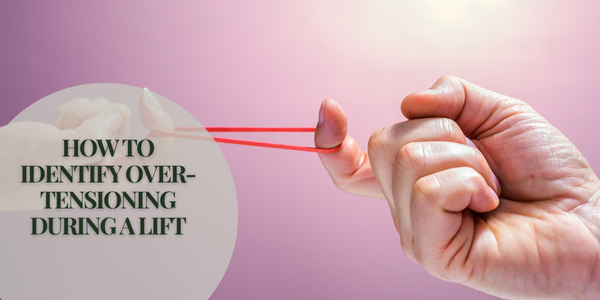
To understand what can happen when there is too much tension on a PDO thread, think about a rubber band. They are made to stretch and to withstand tension so that they can hold things together.
However, if too much tension is put on a rubber band, it can snap and break.
The same is true of PDO threads. They use the same basic principle of tension as a rubber band does, except that it’s a material that’s inserted into a patient’s skin.
As such, the potential for complications is greater with PDO threads than, say, a rubber band.
If a PDO thread were to break after being inserted, the potential complications include the results not appearing as intended, broken pieces migrating to other parts of the body and some discomfort.
While the body will break down the PDO threads over time, a broken thread can cause some sharp pain that goes beyond the simple discomfort.
There’s also a possibility that the broken threads could cause issues with muscles or nerves, though that’s very rare.
| Practitioner-Observed Signs | Patient-Reported Signs |
|---|---|
| Visible puckering or dimpling of skin at insertion or anchor points | Persistent or extreme tightness in the face after treatment |
| Overly stretched skin appearance (rare) | Pain beyond typical discomfort levels |
| Facial asymmetry indicating uneven tension | Sensation of thread tension or pulling with facial movement |
How to Identify Over-Tensioning During a Lift
There are some signs that practitioners can pay attention to while they are performing a PDO thread lift if they are worried about over-tensioning.
It’s possible that if too much tension is being put on the PDO threads, visible puckering or dimpling may occur in the patient’s skin. These often appear as small depressions on the skin, which happen most of the time at the point of insertion or where the PDO threads get anchored during the treatment.
The patient’s skin may also appear overly stretched if there’s over-tensioning. This is rare, but it’s possible if the tension is extreme.
Asymmetry is another telltale sign that there may be over-tensioning during a PDO thread lift. The ideal outcome is for perfect symmetry between sides of the face.
When over-tensioning occurs, a patient’s appearance may be lopsided. This could indicate that the PDO threads were placed too tightly on one area of the patient’s face.
Can Patients Detect Over-Tensioning?
Patients can also help to identify over-tensioning if they feel excessive tightness in their face. While it’s normal to experience some tightness during and immediately following a lift, if the tightness becomes extreme or lasts a while, it could be because the threads are too tight.
This might not occur until after the treatment is over and they’ve left the office, so patients should report anything they might be concerned about to their practitioner.
It’s very important that patients not try to adjust the threads themselves by pressing on their skin or rubbing an area of their face. Any adjustments that might need to be made should be done by the trained professional who performed the treatment in the first place.
Use V Soft Lift’s High-Quality PDO Threads
Tensile strength plays a vital role in the success of PDO thread lifts. However, too much tension could be a big problem, leading to thread breakage or other potential complications.
Practitioners can pay attention to some of the signs of over-tensioning we’ve listed above to avoid making the mistake during the treatment.
They should also use only high-quality PDO threads such as those produced by V Soft Lift. All of our threads are fully FDA cleared for usage, and are of the highest quality.
For more information, contact us today.